Upcoming Events
Join us for Santo Niño!
Faith, Food, and Fellowship, Saturday, January 17, with a 11:00am Mass, followed by a reception in the Parish Center.
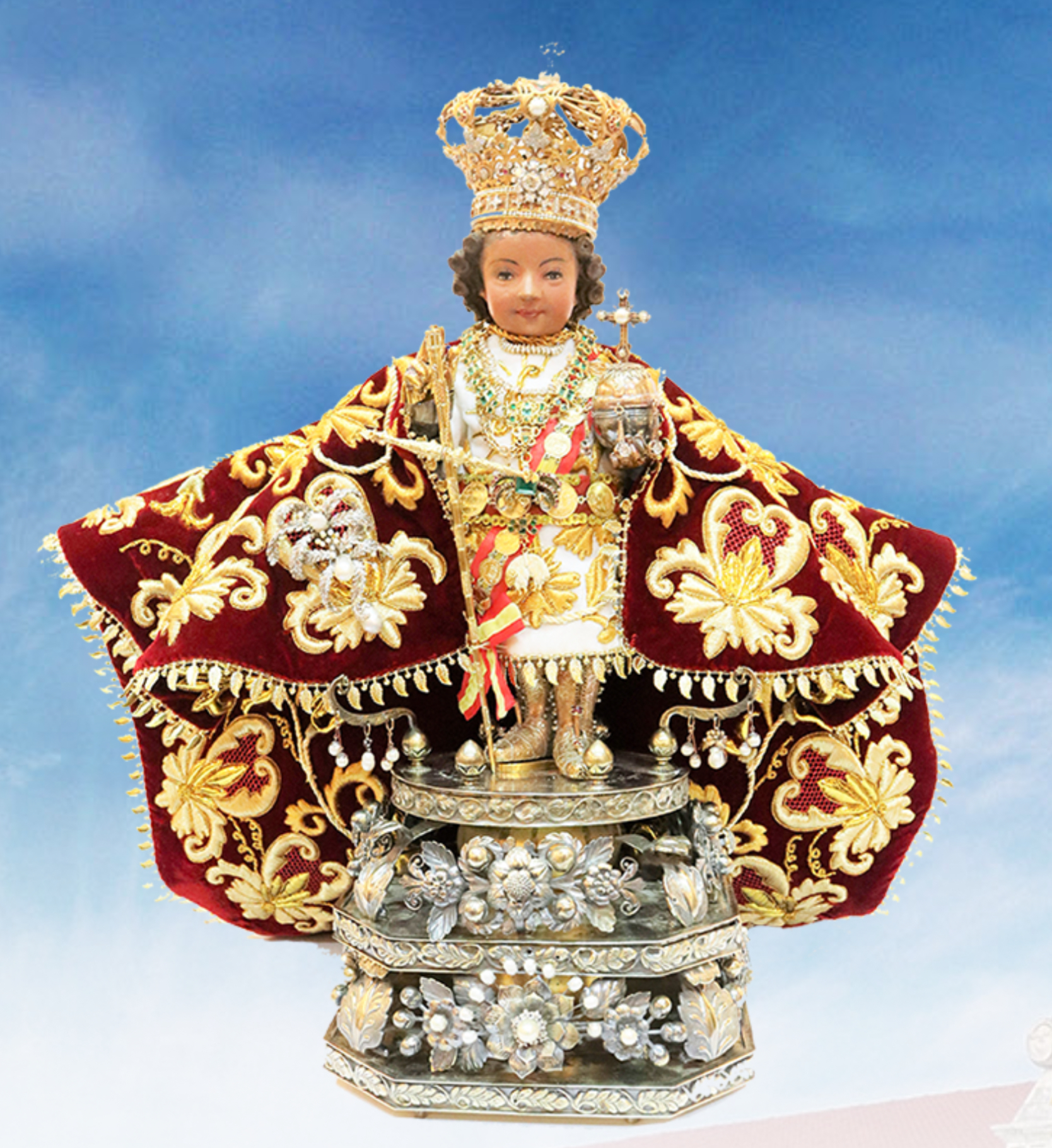
In 1519, Ferdinand Magellan sailed for Spain to seek new trade routes and to circumnavigate the globe. Missionaries accompanied him to spread Christianity. In 1521, upon arriving in the Philippines, Magellan gave a statue of the Santo Niño (Holy Child) to Queen Juana of Cebu after her and her subjects’ conversion to Christianity. This act is recognized as a significant cultural and religious exchange, marking the introduction of Catholicism to the Philippines.
To many Filipinos, the Santo Niño is considered miraculous due to numerous accounts of miracles attributed to the image of the child Jesus. In 1565, the town of Cebu was burned down in an attack, including the church of Santo Niño, but the statue was found unscathed among the ashes. During World War II, a bomb fell through the roof of the San Agustin Church (now the Basilica del Santo Niño in Cebu) but did not detonate; it is said the statue was found dangling by its cape after being thrown from the high altar. These and other events increased people’s faith in the Santo Niño’s miraculous powers, and over the years, many have claimed personal miracles and answered prayers after petitioning the Santo Niño, further strengthening their belief.
On January 19, 2015, Pope Francis endorsed the image and called the Santo Niño the Protector of the Philippines during his pastoral and state visit. Annually, up to 3 million devotees flock to Cebu City to observe the Feast Day on the third Sunday of January and to participate in the nine-day Sinulog, a festival and celebratory prayer dance that blends indigenous and Christian elements.
The Cathedral Filipino Network invites you to come celebrate the Feast of Santo Niño Mass on Saturday, January 17, at 11:00am, followed by a reception in the Parish Center.